5 Reasons Why New Parents Are Buying This To Protect Their Baby As They Learn How To Walk
"This has been a life saver in terms of protecting his little head when he tumbles or trips!"

 By Anna D.Last Updated Nov 4, 2026
Watching your baby learn to crawl and walk is exciting, but it can also be one of the most stressful stages of early parenthood.
They're eager to explore but still unsteady, often tumbling without warning. And every time they land on their head, your heart skips a beat.
As parents, we do everything we can to keep them safe. We baby-proof the living room and cover every sharp corner. But nobody can catch every fall, and we wouldn't want to. Falling is how they learn.
Here's 5 reasons why parents are choosing Benora for extra peace of mind while their little ones keep moving, exploring, and learning.

1. It Softens The Landing
Falling is a normal part of how babies learn to move. But what most parents don't realize is that a young baby's skull bone is about than an adult's.
That's why a harder fall, like off a bed or while climbing, can in worst-case scenarios cause a skull fracture or bleeding inside the head.
In fact, a 2023 study estimated that under 12 months are treated in the ER for falls every year.
Benora still allows the fall, so your baby keeps learning. But it minimizes the hard impact with its 360° ring cushion, which sits around the back of your baby's head.
So when they tip backward, there's soft padding behind them instead of bare wood or tile.

2. Unlike A Helmet, It Doesn't Cover Their Head
Most parents look at helmets first.
Even though they cover more of the head, they come with two impractical problems.
First, many babies hate having anything on their head and pull it off the moment it's secured.
Second, a helmet adds weight and bulk to the part of your baby that already makes them top-heavy, which is why some parents worry it throws off their balance.
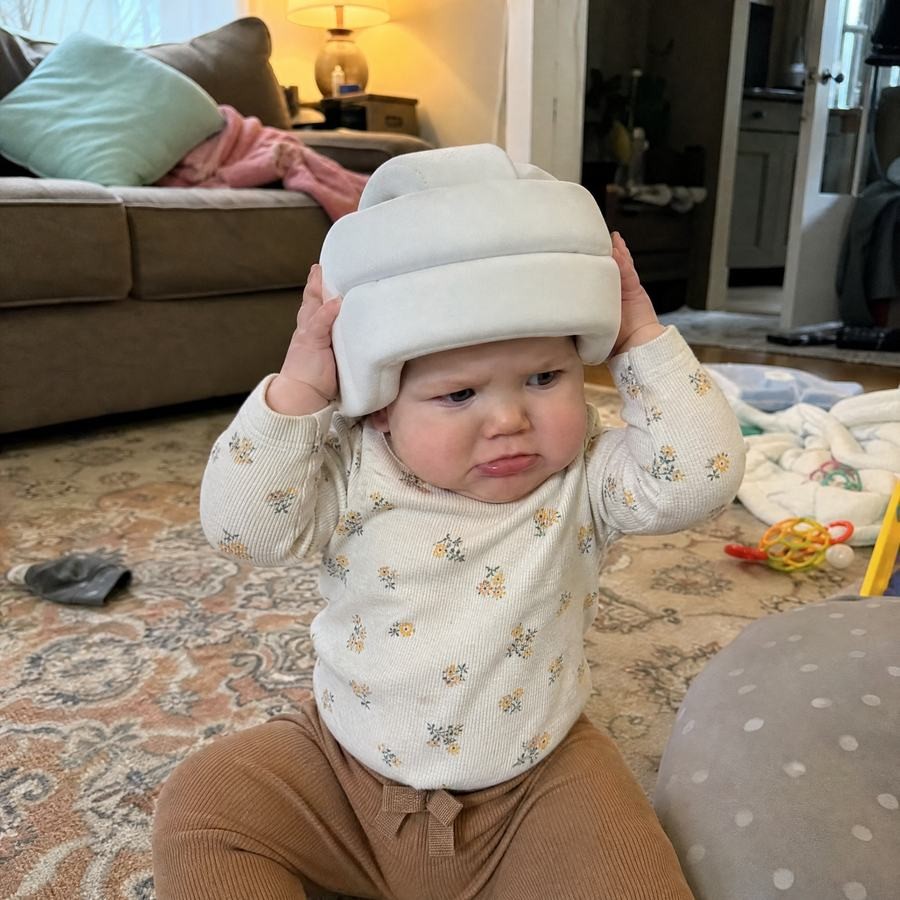
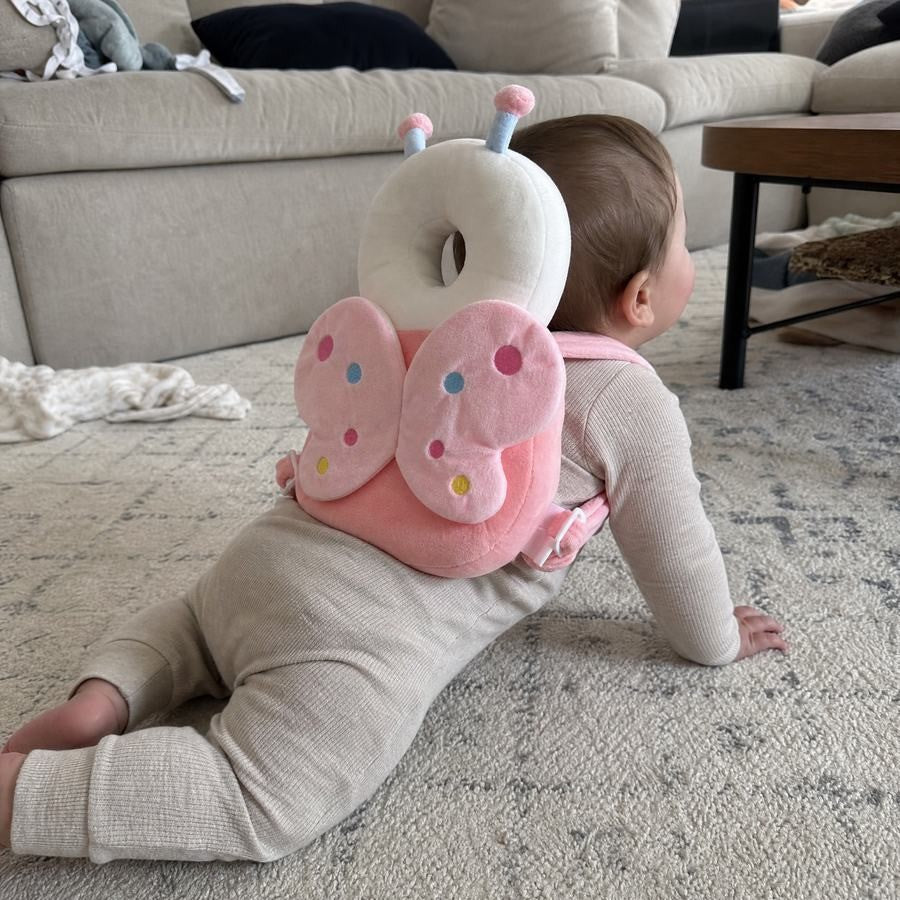
That's one reason parents prefer Benora' backpack-style design: it solves both problems.
Its cloud-soft, puffy fill sits at the back, so babies don't find it intrusive.
And at just 90 grams (about 3.2 oz), it's light enough to feel less bulky than many full-coverage alternatives.
Now you might be thinking: what about the front and sides?
It's a fair question. Benora doesn't cover them. But when babies tip forward, they can see the floor coming, and their hands and knees are already out in front.
Backward is different. They can't see behind them, and it's much harder to reach back and catch themselves. It's also the they learn to catch themselves.
Even after they learn, backward falls still catch them by surprise. There's no warning, and no time to reach back.
That's why Benora focuses on the back of the head.
3. It Gives You A Moment To Breathe
The wobbly stage is stressful because, as parents, we spend every second worrying about every little thing, like:
Benora makes it feel a little lighter.
You stop stressing so much and stop overanalyzing everything. Your baby gets to keep exploring. And you get to sit down in the same room without bracing for that hard thud.

Instead, you hear a cute little .
A fall-alert squeaker sewn into the padding goes off when they land on it.* You'll still go and check they're okay.
You just won't spend the whole afternoon holding your breath because you'll know there's something soft behind them.
And hopefully, you can enjoy a few more of those adorable, clumsy little moments instead of spending every second dreading the next tumble.
Because this stage goes by so quickly. And you deserve to enjoy it, too.
Check Availability →4. More Confidence To Keep Walking
One concern parents have about protective baby gear is whether it interferes with learning to walk.
After all, babies need to wobble, fall, get back up, and try again. That's how they develop coordination.
In fact, parents who use Benora say their babies seem braver and more confident after the first 2 weeks.
They can still crawl, pull themselves up, cruise along furniture, and practice those tiny first steps while wearing it.

And every order includes crawling knee pads and grip socks, giving them a few more practical accessories for their early adventures.
5. The Open Ring Keeps The Back Of Their Head Free
If you've read about flat head, you already know that too much pressure on the back of a baby's head can .
So you might be wondering: won't a cushion behind the head do the same thing?
That's why Benora has a hole in the middle. It's an open ring, not a solid pillow.
So while your baby sits, crawls or stands, there's no solid pad pressing on the center of the back of their head. They still get the soft cushion around it, and you get one less thing to worry about.

To The Parent Holding Their Breath At Every Wobble
You're already a good parent. A tumble doesn't change that, and no one can be everywhere at once.
Benora won't eliminate falls. But with extra cushioning during supervised play, you can stop living in the what-ifs and know you did what you could.
Because you can't catch every tumble. But you'll be at ease knowing something's got their back.
Check Availability →Order today for peace of mind and get free crawling knee pads and grip socks.
Benora SoftFall
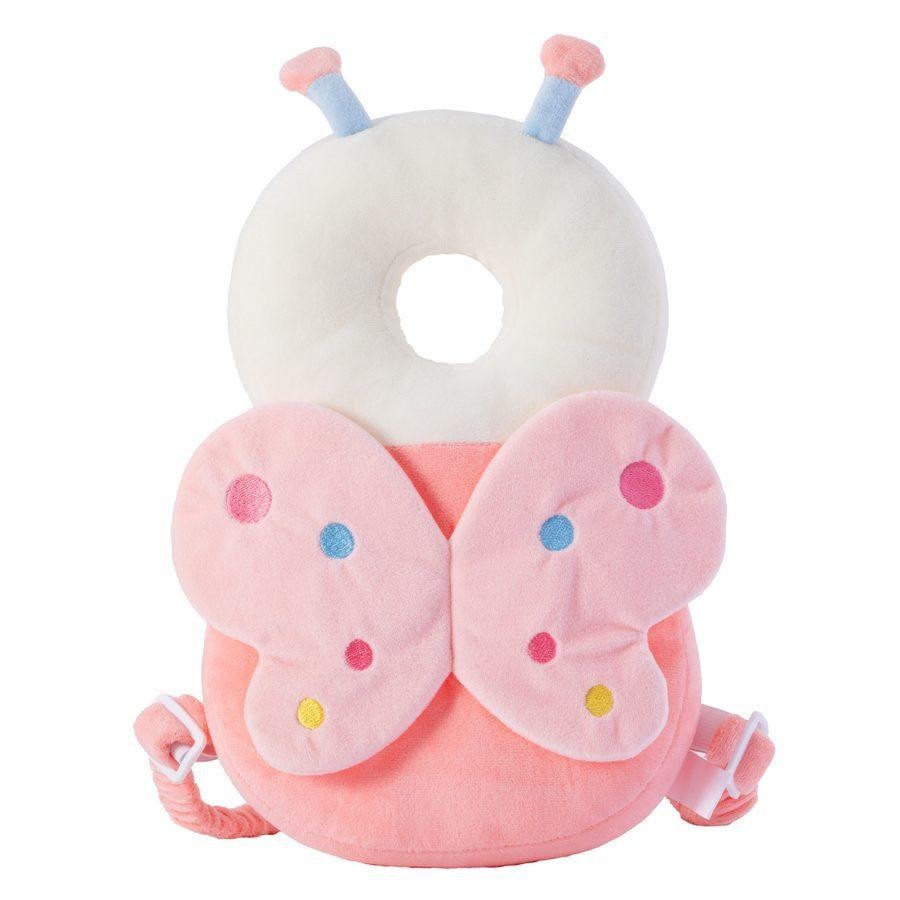
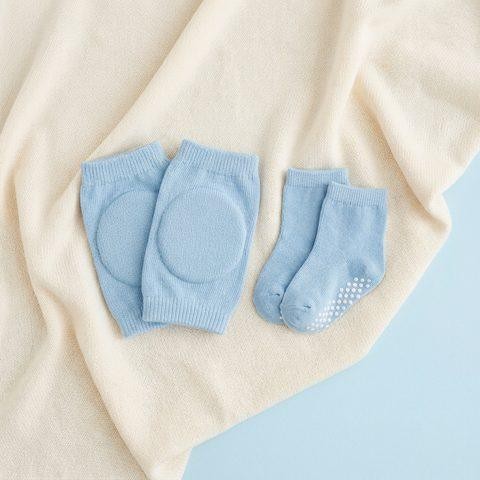
- Free crawling knee pads + grip socks
- Free tracked shipping
- 90-day returns
- In stock, ships within 24 hours
Filmed By Parents At Home
 "He didn't try to take it off & it fit him comfortably while wearing it."@the2momfamily
 "My baby realized this saved him and is more confident and is even trying to stand more with the help of sofa, chair, table"@mamaaub2
 "They have saved my grandson from hitting his head numerous times! He was standing at 7mos., so the size of this one was ideal for his size (about 16lbs.)"@badbaby2o7
 "it provides peace of mind and security for your baby. It's well worth having this for when your baby starts walking."@singri
Benora vs. The Other Ways Parents Cope
 Benora |  Baby helmet | |
|---|---|---|
| Soft padding on their back | ✓ | ✗ |
| Nothing strapped on their head | ✓ | ✗ |
| Squeaks when they land* | ✓ | ✗ |
| Lets them keep practicing falls | ✓ | ✗ |
| Free knee pads + grip socks | ✓ | ✗ |
90 Days To Decide
If Benora isn't right for your little one, email support@hyggles.com within 90 days of delivery. Used is fine, as long as it's clean, undamaged and complete.
Questions Parents Ask
Will my baby actually wear it?
Most do. It looks like a soft toy, weighs about 90 g and sits flat on the back. Start with short play sessions. If it still isn't right, you have 90 days to send it back.
What about forward or sideways falls?
The 360° ring wraps the back of the head, so it helps with straight-back and angled-back falls. It won't cushion a fall forward onto the face.
What age is it for?
From when babies start sitting up on their own, often around 5 to 6 months, through crawling and early walking, usually up to about 2 years. The straps adjust as they grow.
Can my baby sleep in it?
No. Take it off for sleep, car seats, strollers, high chairs and baths. It's for awake, supervised play only.
How fast is shipping?
Orders ship within 24 hours with free tracked shipping. Delivery usually takes 4 to 7 business days to the US.
Comments